
When parents separate or are no longer in a relationship, establishing a formal child custody order can provide structure, stability, and legal clarity for both parents and children.
In Texas, child custody is legally referred to as conservatorship, and custody orders determine how parents share responsibilities for raising their child. These orders address important issues such as decision-making authority, where the child will live, and parenting time schedules.
Without a court order, disagreements about parenting arrangements can quickly become difficult to resolve.
A San Antonio child custody attorney can help parents establish a legally enforceable custody order that protects their parental rights and supports the child’s best interests.
At Denis Law Group, we assist parents throughout San Antonio and Bexar County with child custody establishment and other family law matters.
Schedule a consultation today to discuss your custody case.
What Is Child Custody Establishment in Texas?
Child custody establishment refers to the legal process of creating a court order that defines each parent’s rights and responsibilities toward their child.
These orders are typically issued when:
Parents are not married, and custody has never been established
Parents separate without a formal custody agreement
A parent seeks legal recognition of parental rights
A court must determine custody as part of a family law case
Texas courts use custody orders to ensure that both parents understand their legal responsibilities and that the child’s needs are protected.
Once established, the custody order becomes legally binding.
Understanding Conservatorship in Texas
Texas law uses the term conservatorship instead of custody.
Conservatorship determines how parents share decision-making authority and parenting responsibilities.
Joint Managing Conservatorship
In many cases, Texas courts appoint both parents as joint managing conservators.
This means both parents share responsibility for making important decisions about the child’s upbringing.
These decisions may involve:
Education
Medical care
Religious upbringing
Extracurricular activities
Even when parents share decision-making authority, one parent may be designated as the parent who determines the child’s primary residence.
Sole Managing Conservatorship
In some situations, the court may appoint one parent as the sole managing conservator.
This may occur when:
There is a history of family violence
One parent is unable to care for the child
The child’s safety may be at risk
The sole managing conservator typically has the authority to make major decisions for the child.
Possession and Access
Possession and access refer to the parenting time schedule, often called visitation.
Texas courts often follow a Standard Possession Order, which outlines when each parent spends time with the child.
However, courts may modify the schedule based on the family’s circumstances and the child’s best interests.
The Child Custody Establishment Process in Texas
Establishing a custody order involves several legal steps.
Although every case is different, the process typically follows a structured path through the Texas court system.
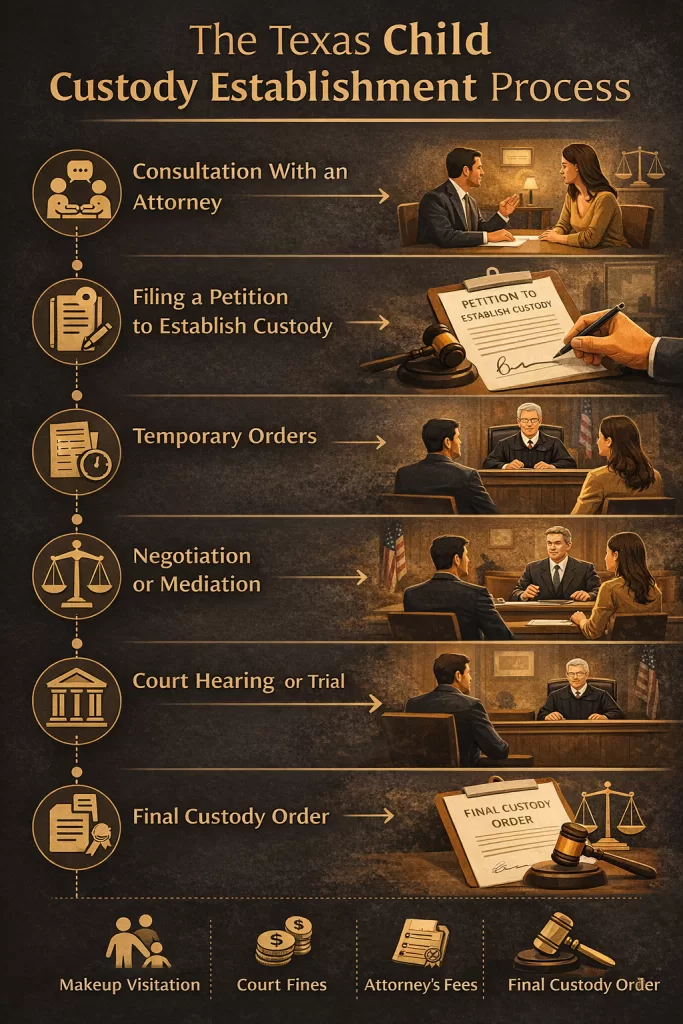
1. Consultation With a Child Custody Attorney
The process often begins with a consultation to review the family’s circumstances and determine the best legal approach.
During this meeting, parents may discuss:
Current parenting arrangements
Legal rights and responsibilities
Potential custody structures
The court process
This conversation helps establish a strategy for pursuing a custody order.
2. Filing a Petition to Establish Custody
To begin the legal process, a parent must file a petition with the appropriate Texas court.
This petition asks the court to establish custody and determine parental rights.
The filing typically includes:
Information about the parents
Information about the child
Requested custody arrangements
Once filed, the other parent must be notified of the case.
3. Temporary Orders
In many custody cases, the court may issue temporary orders while the case is pending.
Temporary orders can address:
Temporary custody arrangements
Parenting time schedules
Child support
Parental decision-making authority
These orders help maintain stability while the case moves through the court process.
4. Negotiation or Mediation
Many custody cases are resolved through negotiation or mediation before reaching trial.
Mediation involves a neutral third party who helps parents attempt to reach agreements regarding custody arrangements.
When parents can cooperate in developing a parenting plan, they often retain greater control over the outcome.
5. Court Hearing or Trial
If parents cannot reach an agreement, the court may hold a hearing where a judge reviews the case.
The judge will consider:
Each parent’s ability to care for the child
The child’s emotional and physical needs
The stability of each parent’s home
The child’s relationship with each parent
Based on this information, the judge will issue a final custody order.
How Texas Courts Determine Child Custody
Texas courts focus on the best interests of the child when determining custody arrangements.
Judges may evaluate factors such as:
Each parent’s ability to provide a stable environment
The child’s emotional and physical needs
The child’s relationship with each parent
The parents’ ability to cooperate
The child’s safety and well-being
Every family situation is unique, and courts carefully consider the circumstances of each case.
Why Establishing a Custody Order Is Important
Without a formal custody order, parenting arrangements may lack legal clarity.
Establishing a custody order can help:
Define each parent’s rights and responsibilities
Prevent misunderstandings between parents
Provide stability for the child
Create enforceable parenting schedules
Allow courts to intervene if violations occur
Legal custody orders help ensure that both parents and children have a clear structure moving forward.
Serving Families Throughout San Antonio and Bexar County
Denis Law Group assists parents with child custody establishment throughout San Antonio and Bexar County family courts.
Our firm represents clients across communities, including:
San Antonio
Alamo Heights
Stone Oak
Helotes
Converse
Live Oak
Universal City
Schertz
If you are seeking to establish custody or protect your parental rights, understanding the legal process is an important first step.
Schedule a Consultation With a San Antonio Child Custody Attorney
Child custody cases can have long-term effects on both parents and children.
Establishing a clear and enforceable custody order can help ensure stability, protect parental rights, and support the child’s well-being.
Denis Law Group assists parents throughout San Antonio with custody establishment and other family law matters.
If you would like to discuss your situation, contact our office to schedule a consultation with a San Antonio child custody attorney.